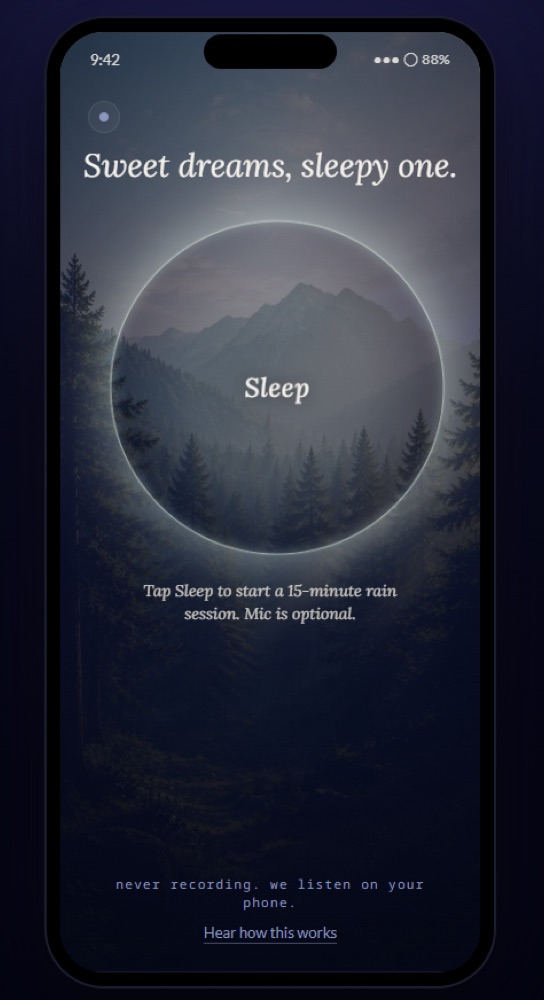
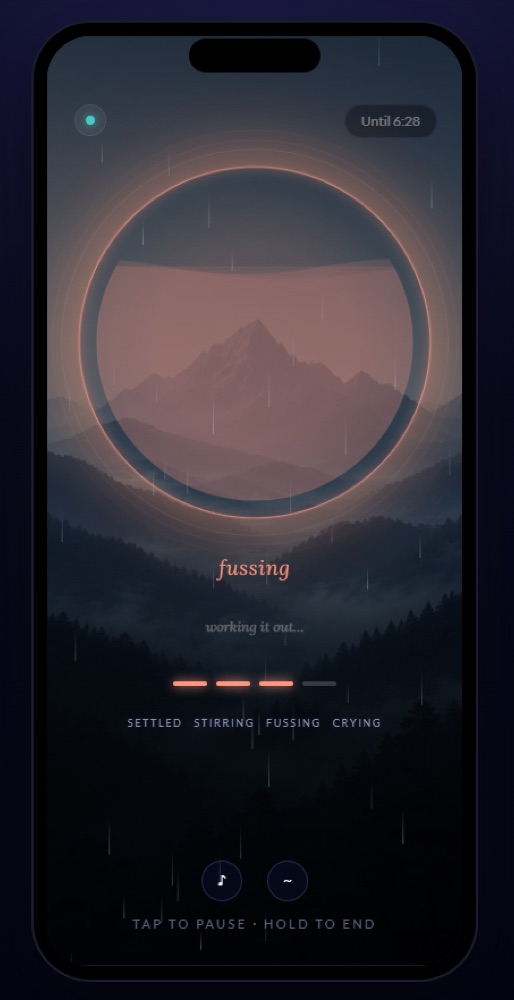
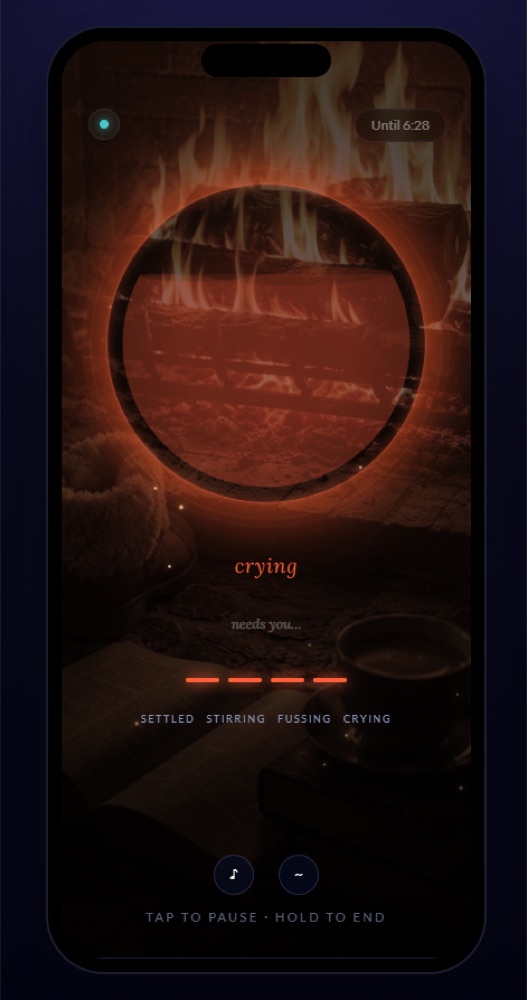
At the end of April, I did the pre-production part with Claude: positioning, a market scan (I had done one with ChatGPT before, but I wanted a second opinion, and I suspected the market could have changed) and the MVP scope. I found out that sleep apps live before sleep (schedules) or after it (logs), and nobody is in the room while the baby falls asleep, only the baby monitors using two phones or a special device. Moreover, it turned out that babies waking up at night is a real problem, and I couldn't find a single app that helps soothe them back to sleep without waking up the parent.
I hesitated whether I should build a state machine or use some local AI model for my idea, and it turned out on-device AI would be the best decision if I wanted to distinguish a baby's cries from other voices and noises. The research showed the best one for that would be Google's YAMNet, and I'll dedicate a whole post to that, as setting it up and teaching it to react to a baby's cries turned out to be an AMAZING adventure.
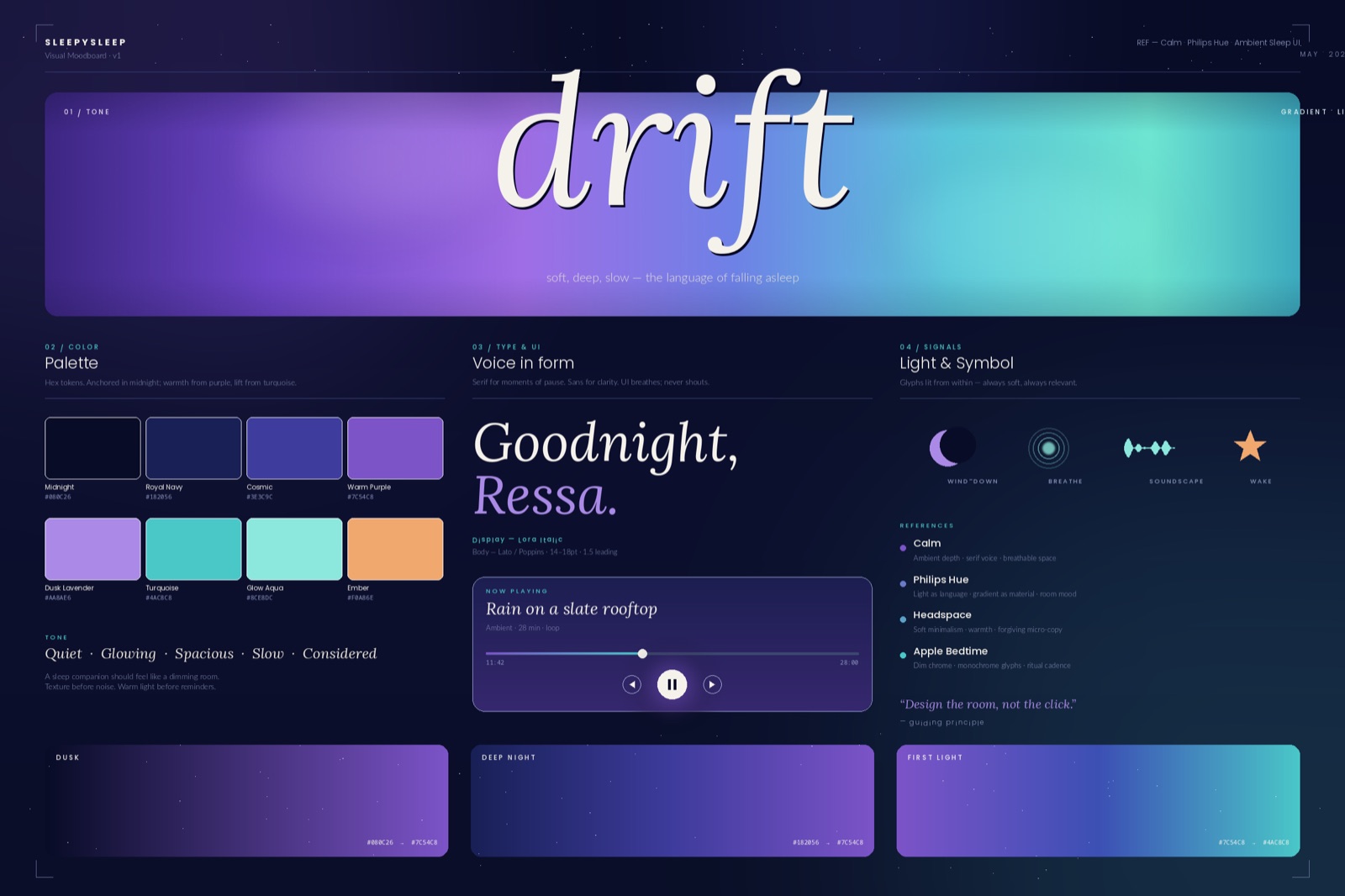
Then I hired a design agency made of AI agents: design, code, UX, analytics, product, all running at once. It was a huge amount of work, because I was evaluating basically everything until the MVP plan looked tight.
The MVP was supposed to be a one-scene demo, two scenes max. But I wanted to build all the audio mechanics and all the cool visual features, and to make it crossfade smoothly.. so I made all five in the first prototype and was extremely proud of myself.
I didn't have a Mac, so the browser became my simulator. The whole interaction model lived in one HTML file built on a Windows PC: hold to begin, the water level is the loudness, preview other scenes, switch to another one, hold to end. One evening I went through about 40 rounds of annotated screenshots ("no no no revert to the previous version, just move the button as I asked") and locked the prototype one night at the beginning of May (why wasn't I sleeping...). The iOS app was later generated from that flow.